
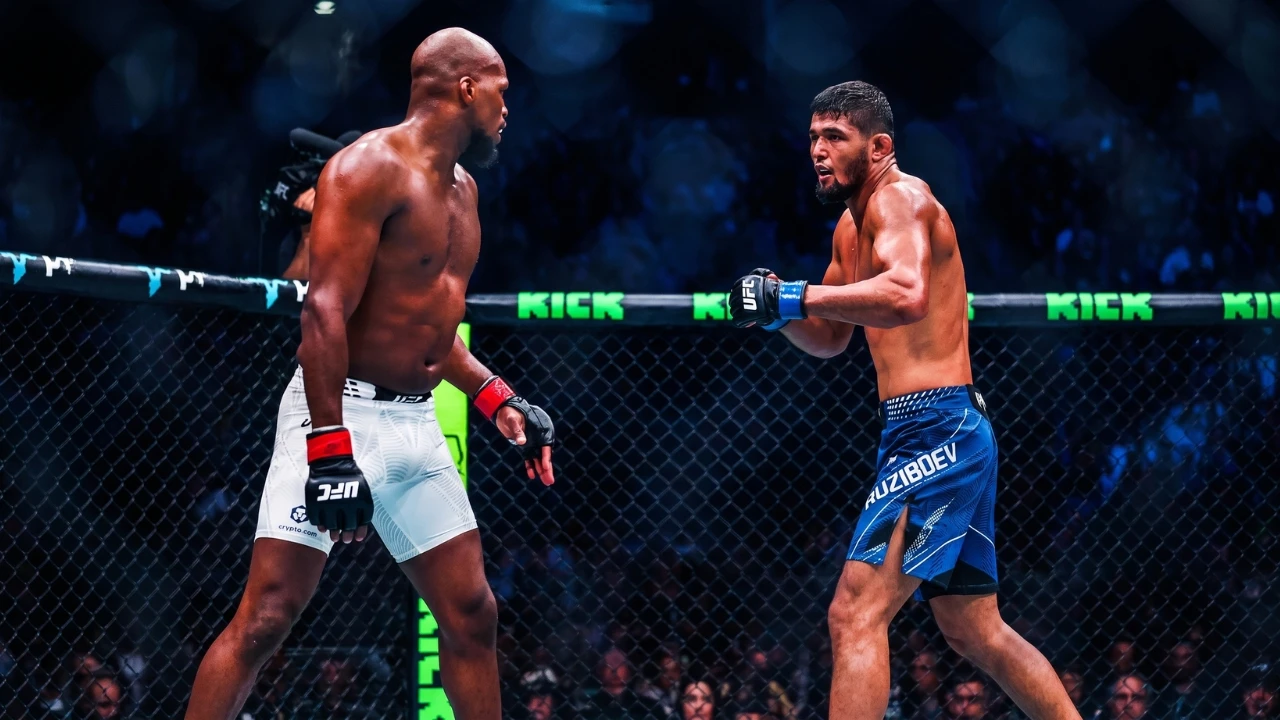
Michael Page Felt Disrespected After Denied UFC Paris Cage Interview

Michael Page said he felt disrespected after the UFC kept him off the microphone following his win at UFC Paris. The British striker told Ariel Helwani the cage interview denial landed even harder once it became clear the promotion was not going to offer him another deal.
Page closed a six-fight UFC contract on Sept. 5 at Accor Arena with a unanimous decision over Nursulton Ruziboev. All three judges scored the middleweight bout 29-28, lifting Page to 26-3 overall and 5-1 inside the Octagon.
The performance did not match the reputation that first made him a draw. Page landed 12 significant strikes across 15 minutes, the Paris crowd booed stretches of the fight, and the finish that once defined his Bellator run never arrived.
That muted showing was the last scheduled fight on his deal. Days later, Dana White confirmed the UFC would not re-sign him and rankings panelists were told Page was no longer eligible to be ranked.
Page said he still expected a conversation before the relationship ended that way. “I wouldn’t have expected it to be dealt with in a way that it was dealt with,” he told Helwani on The Ariel Helwani Show. “I found that quite disrespectful, to be fair.”
Helwani asked specifically about the missing post-fight interview in the cage. Page framed the decision as unnecessary rather than a simple broadcast choice.
“What is the harm in allowing me to speak?” he asked. He pointed to fights he and Helwani have both watched that offered far less action and still ended with a fighter on the mic.
“You’ve seen fights that have been absolutely terrible, and they still get to go on the mic and say their piece,” Page said. “So this is the second time it’s happened to me, and I feel like, especially if you knew you wasn’t gonna re-sign me, what was the harm in even allowing me to, you know, speak to my fans, speak to the crowd, the Paris crowd that was there, which who were amazing.”
The first time came after his March win over Sam Patterson in London, another decision that drew heavy boos in his own building. Page said then that skipping the in-cage interview only spotlighted the promotion’s unhappiness with the performance.
He repeated that theme after Paris. He wanted a short chance to address the fans who showed up, not a platform to argue his case for a new contract in the moment.
Page also said the cut itself arrived without a private sit-down. “I found out at the same time everybody else found out,” he told Helwani. He argued that if the UFC was unhappy with his output, someone should have told him directly so he knew where he stood.
“If you’re not happy with the performances, have a conversation with me,” Page said. “At least it gives me a goal and something to work towards, and I know exactly where I stand with the partnership.”
That request goes to the heart of why the interview denial stung. Page viewed the Octagon microphone as a basic courtesy after a win, especially in a building that greeted him warmly on the walkout even if the fight itself left people restless.
The UFC’s side of the ledger is simpler and has been public for days. White said the matchmakers did not want to bring him back and that removing him from the rankings followed because he was no longer on the roster.
Page’s UFC run produced wins over Patterson, Jared Cannonier, Shara Magomedov, and Kevin Holland, with his only promotional loss coming by decision to Ian Machado Garry. None of those victories ended by finish, a sharp drop from the highlight-reel knockouts that built his name before he signed.
He has admitted the gap himself. After Paris he said he felt like he was holding back, chasing clean shots instead of taking the risks the crowd wanted, and that the fans and the UFC both deserved more.
That self-critique did not change the ending. A 5-1 record was not enough to keep him on the roster once the style in the cage stopped matching the brand the company sold when he arrived.
The denied interview now sits as the last image of that partnership. Page still does not know who made the call to keep him off the microphone and said he would not even know where to take the complaint.
Free agency is the next chapter. At 39, Page leaves with a four-fight winning streak, a flashy striking reputation that never fully translated in the UFC, and interest already circulating around other promotions and a possible return to boxing.
What he wanted in Paris was a few sentences with the crowd that paid to see him. The UFC closed the night, and then the contract, without giving him that chance.