
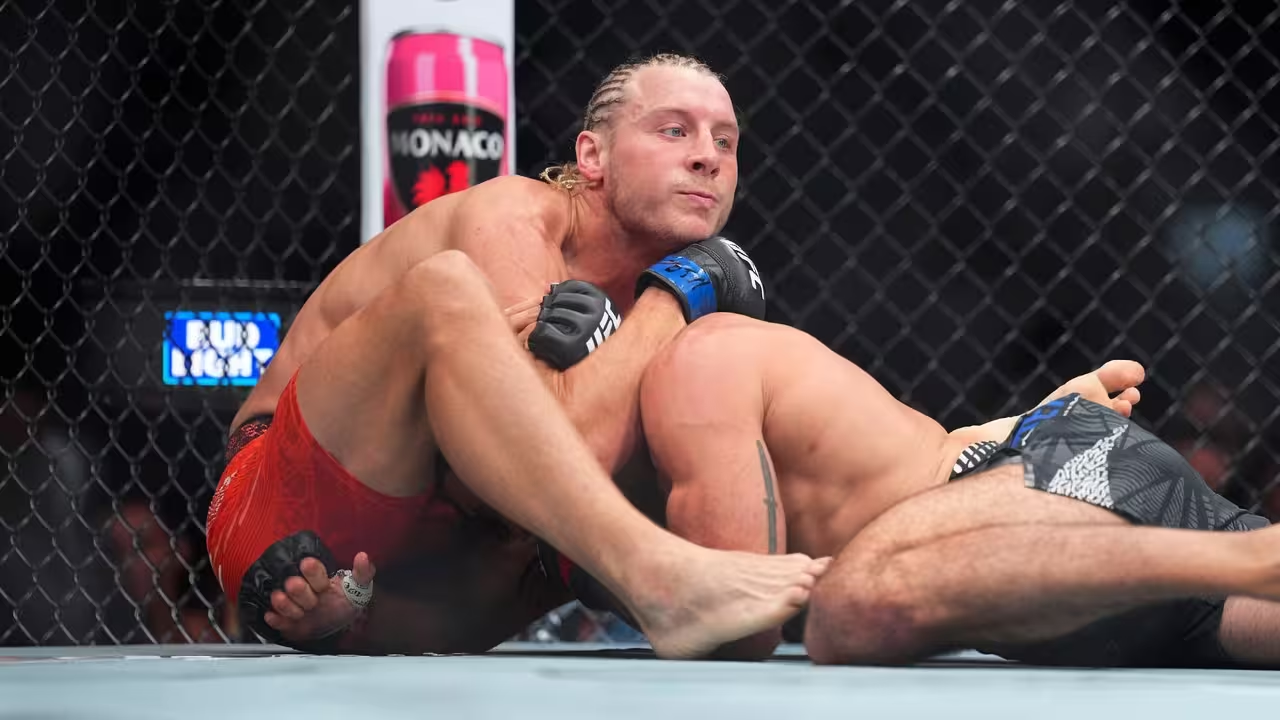
Paddy Pimblett Opened Up About Retirement — And What It Really Means for His Title Dream

Paddy Pimblett has never been short of confidence. The Liverpool lightweight talks big, fights loud, and carries himself like a man who believes the belt is only a matter of time. That is why his latest comments hit differently. In a recent interview, Pimblett admitted something most fighters keep private: he thought about retiring from MMA if he lost to Benoit Saint Denis.
The words were blunt. No spin. No carefully managed message.
“If I can’t beat BSD then what’s the point in fighting? If I can’t beat BSD I’m never gonna be world champ.”
That is not the language of a fighter protecting his brand. That is a man drawing a line under his own ambition. For Pimblett, the matchup with Saint Denis was never just another win on the résumé. It was a measuring stick. Beat BSD, and the title path still makes sense. Fail, and the dream starts to look like noise.
In the fight game, that kind of honesty is rare. Fighters lose and immediately talk about the next camp, the next opponent, the next chance. Pimblett flipped that script. He framed the fight as a referendum on whether he belongs among the elite. Not whether he is popular. Not whether the crowd loves him. Whether he can actually get to the top of the lightweight division.
Saint Denis is no soft landing. He is tough, aggressive, and hard to finish. He brings pressure, pace, and a style that forces you to answer questions under fire. When Pimblett says that failing to beat him would make the world title feel impossible, he is not insulting BSD. He is elevating the standard he has set for himself. In his mind, if you cannot clear that kind of threat, you are not ready for the men sitting at the top of the division.
There is a strange power in that mindset. It can look extreme from the outside. Retiring after one loss? That sounds dramatic until you understand how Pimblett sees the sport. He is not fighting for a paycheck and a highlight reel. He is chasing a championship. Once that destination feels closed off, the grind loses its meaning. Training camps, weight cuts, damage, and sacrifice only make sense if the prize is still real.
Fans will debate whether that pressure helps or hurts him. Some will say it shows a champion’s mentality: no excuses, everything on the line. Others will say it puts too much weight on a single night. Both can be true. What matters is that Pimblett is clear about the terms. He is not hiding behind vague goals. He has named the barrier and attached his future to clearing it.
That clarity also says something about where he believes he is in his career. Pimblett is past the stage of just being a rising name. The novelty is gone. The spotlight is permanent. Every performance is judged against title contention, not potential. In that world, a loss is not only a setback. It is a story that follows you. By saying he thought about walking away if he could not beat BSD, he is admitting he understands the stakes better than most.
It also reframes how people should listen to him. The bravado, the crowd work, the big talk about becoming champion — those things are easier to dismiss as entertainment. This comment is harder to wave away. It shows a fighter who has privately measured himself against a hard opponent and decided the result would define whether the chase was still worth it.
Of course, thinking about retirement is not the same as doing it. Fighters say all kinds of things in the heat of preparation and reflection. What lingers is the standard he set. Pimblett did not say he needed an easy path. He said if he could not beat a dangerous lightweight like Saint Denis, then the world title was not realistic. That is a high bar, and he put it on himself.
For supporters, that should be encouraging. A fighter who ties his purpose to beating real competition is not looking for shortcuts. For critics, it is another chance to watch and see if the words match the walk. Either way, the message is simple and hard to forget.
Paddy Pimblett does not just want the lightweight title. He has already decided what kind of fighter he needs to be to deserve it. And if he ever falls short of that standard, he has made it clear he is willing to ask the toughest question in combat sports: what is the point of fighting at all?